Introduction
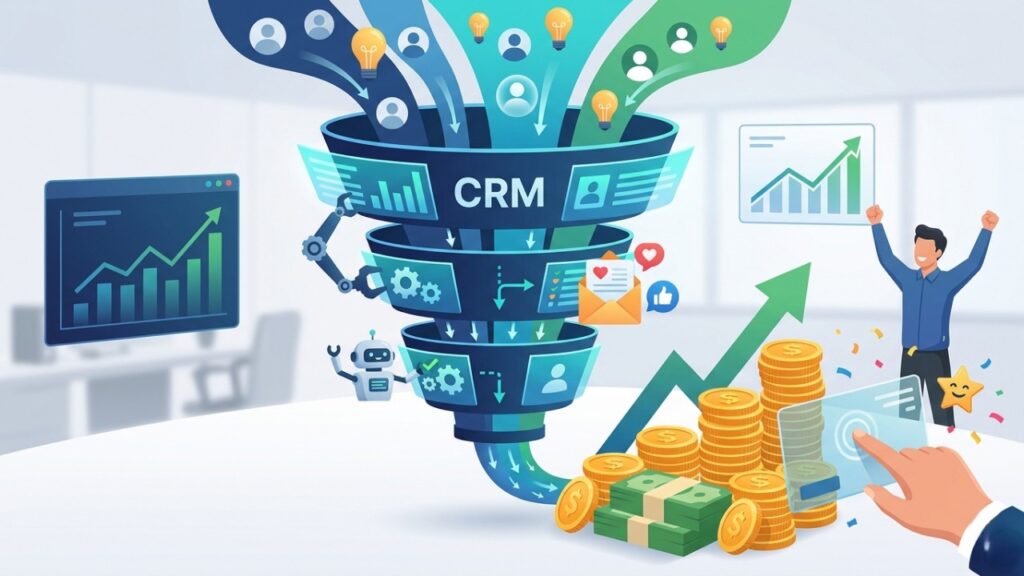
Customer Relationship Management (CRM) systems organise customer data, but CRM Automation transforms them into powerful revenue-generating tools. Instead of manual tracking, automated workflows streamline communication and sales processes.
Personalisation has become a central element of Customer Experience, shaping how users perceive and connect with a brand. As organisations continue their Digital Transformation journey, creating individualised digital interactions is no longer optional but essential.
Automating Sales Processes
One of the biggest advantages of CRM Automation Tools is the ability to simplify repetitive sales activities. Automated lead nurturing sequences ensure that prospects receive timely follow-ups. Email workflows, reminders, and task automation reduce delays and prevent missed opportunities.
By implementing an Automated Sales Process, sales teams can focus on high-value conversations while repetitive tasks are handled automatically. This not only increases productivity but also helps accelerate deal closures.
Data-Driven Insights
Modern CRM platforms provide analytics that offer valuable insights into customer behaviour, purchase patterns, and engagement levels. With the help of CRM for Sales Growth, businesses can identify high-value leads and tailor strategies accordingly.
Predictive insights allow companies to prioritise opportunities and personalise communication, improving overall sales performance.
Conclusion
Implementing CRM Automation allows businesses to improve efficiency, strengthen customer relationships, and drive consistent revenue growth. Companies that adopt intelligent automation often experience higher productivity and better sales outcomes.
With the right strategy and the right CRM Automation Tools, businesses can transform their sales operations into a scalable and data-driven system.