In today’s digital world, mobile applications have become a major part of everyday life. Whether people are shopping online, booking a cab, ordering food, attending online classes, managing bank accounts, or streaming entertainment, mobile apps make everything faster and more convenient. Smartphones are no longer used only for communication; they have become essential tools for both personal and professional activities.
As mobile usage continues to grow, businesses are increasingly investing in mobile applications to improve customer engagement, strengthen their digital presence, and deliver better user experiences. A mobile app is no longer just an optional digital asset for companies. It has become a powerful business solution that helps brands connect directly with users, increase accessibility, and create long-term growth opportunities.
Modern customers expect quick, smooth, and personalised digital experiences. Businesses that fail to adapt to this mobile-first environment often struggle to stay competitive in the market. This is why mobile app development has become one of the most important parts of digital transformation across industries.
How Today’s Generation Uses Mobile Applications
The current generation relies heavily on mobile applications in almost every aspect of life. From the moment people wake up until the end of the day, mobile apps play a role in their daily routine. Social media, digital payments, online shopping, healthcare consultations, fitness tracking, food delivery, entertainment platforms, and business communication all operate through mobile applications.
Today’s users prefer mobile apps because they provide speed, convenience, and easy accessibility. People expect applications to load quickly, work smoothly, and provide personalised experiences based on their interests and behaviour. If an app feels slow or difficult to use, users quickly move to another option.
The younger generation especially prefers businesses that offer mobile-friendly services because they value convenience and instant access. This changing consumer behaviour has encouraged businesses to invest more in mobile technology to improve customer satisfaction and brand engagement.
Mobile applications are also changing how businesses communicate with customers. Push notifications, live chat support, personalised recommendations, and real-time updates help companies stay connected with users more effectively than traditional methods.
Why Mobile Apps Matter for Businesses
Businesses today operate in a highly competitive digital environment where customer experience has become one of the biggest factors influencing success. Mobile applications help businesses create direct communication channels with customers while improving accessibility and service quality.
A well-developed mobile application allows businesses to provide faster support, simplify user interactions, and offer services more efficiently. Customers can browse products, make payments, track orders, schedule appointments, or contact support teams directly through their smartphones without any complications.
Mobile applications also help businesses improve customer loyalty. When users regularly interact with a company through a mobile app, they become more connected to the brand. Features such as personalised offers, reward systems, and instant notifications further improve customer engagement and retention.
In addition to improving customer experiences, mobile apps also support business growth by increasing operational efficiency. Many companies now use mobile applications internally for employee management, communication, analytics, logistics, and workflow automation.
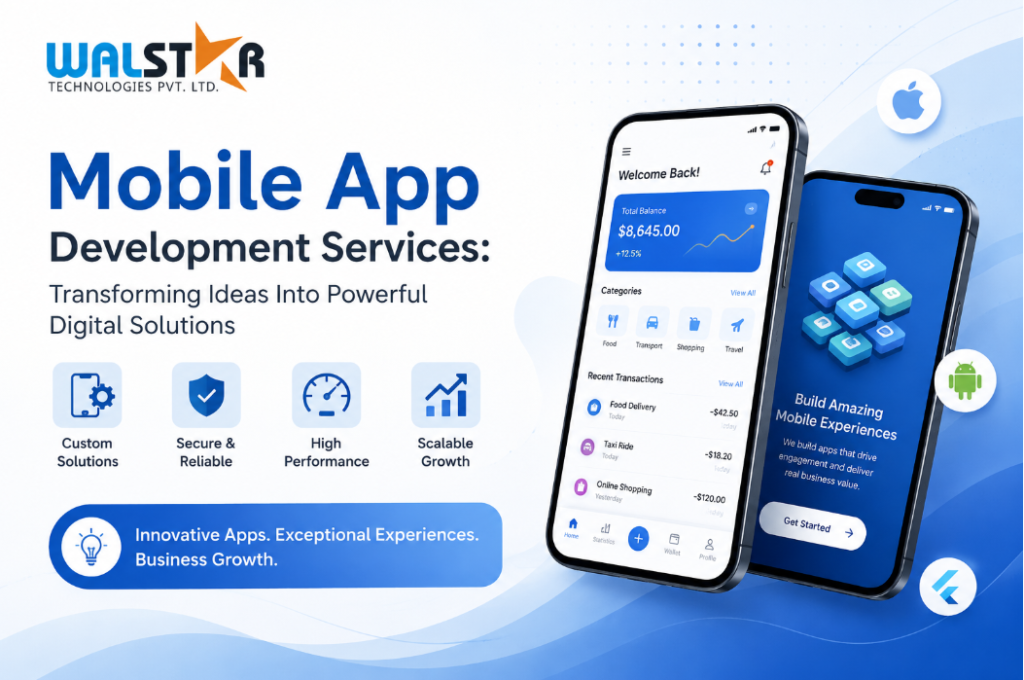
Transforming Ideas Into Successful Mobile Applications
Every successful mobile application starts with an idea, but turning that idea into a functional and scalable solution requires proper planning, technical expertise, and user-focused development.
The process of mobile app development involves understanding the business objective, identifying user requirements, designing intuitive interfaces, selecting the right technologies, and building secure and high-performing systems.
Modern app development is not only about creating visually attractive interfaces. Businesses also need applications that are fast, secure, reliable, and capable of handling future growth. Users today expect smooth navigation, responsive design, and seamless performance across devices.
Developers focus on creating applications that combine functionality with user experience. An application should solve problems efficiently while remaining easy to use. This balance between design and performance is what often determines whether an app becomes successful in the market.
Mobile App Development Technologies
Technology plays a major role in determining how efficiently a mobile application performs. Choosing the right framework helps improve development speed, scalability, maintenance, and overall user experience.
One of the most popular technologies in modern app development is Flutter, developed by Google. Flutter allows developers to create applications for both Android and iOS using a single codebase. Businesses prefer Flutter because it reduces development time while still delivering high-quality user interfaces and excellent performance.
Another widely used framework is React Native, developed by Meta. React Native is known for its flexibility and near-native performance. It enables faster development and easier maintenance, making it a preferred choice for many startups and growing businesses.
Ionic is also commonly used for hybrid app development. It helps businesses create lightweight and responsive applications that work smoothly across different platforms. Companies looking for faster and more affordable development solutions often choose Ionic for their mobile projects.
These technologies are helping businesses launch applications more efficiently while maintaining strong functionality and modern user experiences.
Android and iOS App Development
Android and iOS are the two dominant mobile platforms in the global market. Businesses often choose one or both platforms depending on their audience and business goals.
Android has a massive global user base, making it ideal for businesses looking to reach wider audiences. Android applications are commonly used in industries such as eCommerce, healthcare, education, logistics, and entertainment.
iOS, on the other hand, is recognised for premium user experiences, strong security standards, and high customer engagement. Businesses targeting premium users and international markets often prioritise iOS app development.
Many businesses now prefer cross-platform development because it allows them to build applications for both Android and iOS using a single codebase. This approach reduces costs, speeds up development, and simplifies maintenance while ensuring consistent user experiences across platforms.
Importance of UI/UX Design
The success of a mobile application depends heavily on how users interact with it. Even technically advanced applications may struggle if the interface feels confusing or difficult to navigate.
Good UI/UX design improves the overall experience by making applications visually appealing, easy to understand, and smooth to use. Users today expect clean layouts, responsive designs, and fast navigation without unnecessary complexity.
An effective design not only improves usability but also increases customer retention. When users enjoy interacting with an application, they are more likely to continue using it regularly.
Modern mobile app design focuses on simplicity, accessibility, and user engagement. Businesses now understand that design is not just about appearance — it directly affects customer satisfaction and business performance.
Regional Insights
The mobile app development industry is growing rapidly across different regions worldwide. Countries with increasing smartphone penetration and internet accessibility are witnessing significant demand for mobile applications.
In North America, businesses continue investing heavily in mobile technologies to improve customer experiences and support digital innovation. Industries such as healthcare, finance, eCommerce, and enterprise solutions are major contributors to app development growth in the region.
The Asia-Pacific region is experiencing some of the fastest growth in mobile app usage. Countries like India, China, Singapore, and Indonesia are seeing rapid digital transformation due to growing internet access, affordable smartphones, and increasing online services. Mobile payment systems, food delivery platforms, educational apps, and eCommerce applications are especially popular in this region.
European businesses are focusing on secure and customer-centric digital solutions, while the Middle East and Africa are seeing increasing adoption of mobile banking, logistics, and healthcare applications as digital infrastructure improves.
Market Outlook
The future of the mobile app development industry looks highly promising. Businesses across almost every industry are increasing their investments in digital platforms as consumer behaviour becomes more mobile-focused.
The demand for mobile applications continues to grow due to the rise of online shopping, digital payments, remote work, virtual learning, and on-demand services. Companies are now focusing on creating mobile-first experiences to stay competitive in evolving markets.
As technology continues to advance, businesses are expected to invest more in intelligent and data-driven mobile applications that provide personalised user experiences. The global app market is likely to expand further as more businesses adopt digital transformation strategies.
Mobile applications are no longer limited to large enterprises. Startups, small businesses, and local service providers are also embracing mobile technology to improve customer reach and operational efficiency.
Technological Trends in Mobile App Development
Modern mobile applications are becoming smarter and more interactive because of emerging technologies. Innovations such as Artificial Intelligence, Machine Learning, cloud computing, and the Internet of Things are transforming how applications function.
Artificial Intelligence is helping apps provide personalised recommendations, automated customer support, and advanced analytics. Machine Learning enables applications to learn from user behaviour and improve experiences over time.
Cloud computing is making applications more scalable and efficient by allowing secure data storage and remote accessibility. Businesses can now manage applications more efficiently without relying entirely on physical infrastructure.
Technologies like Blockchain and Augmented Reality are also gaining popularity in industries such as finance, retail, gaming, and real estate. These technologies are helping businesses create more immersive and secure mobile experiences.
Market Dynamics and Growth Drivers
Several factors are driving the rapid growth of the mobile app development industry. One of the biggest reasons is the increasing use of smartphones worldwide. As more people gain internet access and mobile connectivity, the demand for digital services continues to rise.
The expansion of digital payment systems and eCommerce platforms has also increased the need for secure and user-friendly mobile applications. Consumers now prefer mobile-based transactions because they are faster and more convenient.
The growth of remote work, online education, telemedicine, and digital entertainment has further accelerated mobile app usage globally. Businesses are adopting mobile technologies not only to improve customer experiences but also to streamline internal operations and improve efficiency.
At the same time, competition among businesses is encouraging companies to innovate continuously. Organisations are investing in mobile applications to strengthen brand visibility, improve customer retention, and stay ahead in the digital marketplace.
Future of Mobile App Development
The future of mobile app development will continue to focus on innovation, automation, and personalised user experiences. Applications are expected to become smarter, faster, and more integrated with advanced technologies.
The introduction of 5G technology will improve app performance and enable faster real-time experiences. Wearable devices, voice-enabled applications, and AI-powered automation are also expected to become more common in the coming years.
Businesses that invest in modern mobile technologies today will be better prepared for future digital transformation opportunities. As customer expectations continue to evolve, mobile applications will remain one of the most important tools for business growth, communication, and customer engagement.